Xander Flores · 29 September 2026
Customized Indexing Approaches and Their Role in Sustaining Competitive Edges During Web Entity Transitions
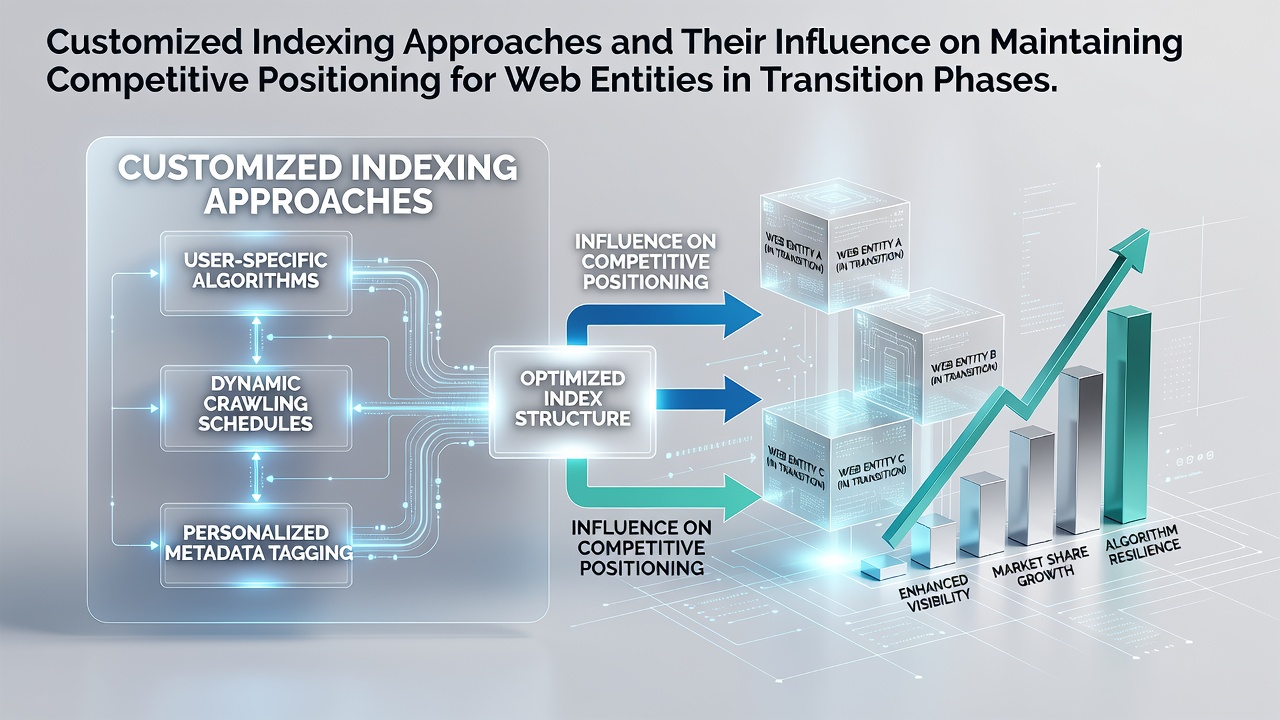
Web entities navigating transition phases encounter shifts in ownership, platform architecture, content restructuring, or regulatory compliance that directly affect how search engines discover and rank their pages; customized indexing approaches address these variables through tailored crawling directives, priority queuing systems, and adaptive sitemap configurations that maintain visibility while competitors adjust more slowly.
Core Elements of Customized Indexing
Standard indexing protocols rely on uniform crawler behavior across all domains, yet customized methods introduce parameters that respond to specific site conditions such as large-scale redirects, temporary staging environments, or integration with legacy databases; these adjustments include dynamic robots.txt rules that permit selective access during migration windows, XML sitemaps segmented by content type and update frequency, and API-driven submissions that notify engines of structural changes in real time.
Data from industry monitoring tools shows that entities applying such custom layers experience reduced indexing lag compared with those using default settings, particularly when transitions involve thousands of URLs or international domain variants.
Transition Phases and Their Indexing Demands
Ownership changes frequently trigger rebranding and URL pattern modifications that risk temporary de-indexing if crawlers encounter inconsistent signals; customized approaches counter this by establishing canonical hierarchies early and routing crawl budget toward high-value pages first, while monitoring tools track coverage metrics across the transition timeline.
Platform migrations, whether from monolithic to headless architectures or between content management systems, introduce new URL structures and metadata frameworks that benefit from pre-configured indexing templates; these templates prioritize mobile-first rendering signals and structured data markup aligned with the new environment, ensuring continuity in how search engines interpret page intent.

Impact on Competitive Positioning
Entities that deploy customized indexing maintain higher average positions in result sets during periods when rivals undergo similar transitions without equivalent preparation; this occurs because refined crawl directives accelerate the incorporation of updated content signals, while competitors face extended periods of partial indexing or reliance on outdated cached versions.
Research conducted by academic teams at institutions such as Oxford Internet Institute indicates measurable differences in visibility retention when adaptive indexing parameters align with transition timelines, particularly in sectors where search traffic constitutes a primary acquisition channel.
Observers note that September 2026 marks scheduled enhancements to several major engine infrastructures that emphasize real-time indexing responsiveness; entities already equipped with custom frameworks stand positioned to integrate these updates without additional reconfiguration delays, preserving ranking stability amid broader market adjustments.
Implementation Patterns Across Regions
European organizations operating under digital market regulations have adopted segmented indexing strategies that separate compliance-related pages from commercial content, allowing precise control over how regulatory disclosures appear alongside core offerings; this segmentation preserves crawl efficiency while satisfying transparency requirements from bodies such as the European Commission.
North American entities, facing rapid consolidation in digital advertising platforms, apply custom indexing to isolate performance data endpoints and prevent unnecessary resource expenditure on non-public sections during ownership handovers; similar patterns appear in Australian market reports where localized search behaviors reward sites that maintain consistent indexing velocity through transition events.
Measurement and Adjustment Cycles
Performance tracking relies on log-file analysis combined with coverage reports that reveal which custom rules produce the fastest incorporation of new signals; entities refine these rules iteratively by correlating indexing speed with traffic retention metrics, adjusting priority queues as transition milestones pass.
One documented case involved a multinational retailer that implemented region-specific sitemap hierarchies during a platform consolidation, resulting in sustained organic reach across multiple markets while peer organizations experienced temporary visibility drops.
Conclusion
Customized indexing approaches function as operational tools that align search engine discovery processes with the specific constraints of transition phases, enabling web entities to sustain competitive positioning through accelerated content incorporation and reduced visibility gaps; as engine infrastructures continue evolving, entities maintaining these adaptive frameworks retain measurable advantages in coverage consistency and ranking continuity across shifting conditions.